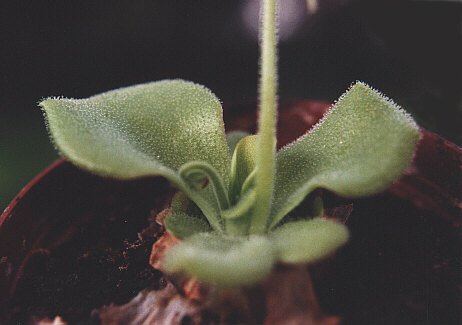
The difference to all othe species belonging to the section Orcheosanthus is obvious when the summer leaves are regarded, because the margins of the leaves are slightly downturned. The summer rosette consists of up to 10 pale green leaves, being elliptic to obovate and up to 12 cm long. Spectacular are also the glands on the upper side of the leaves. I do not know any Pinguicula species which does have such large glands.
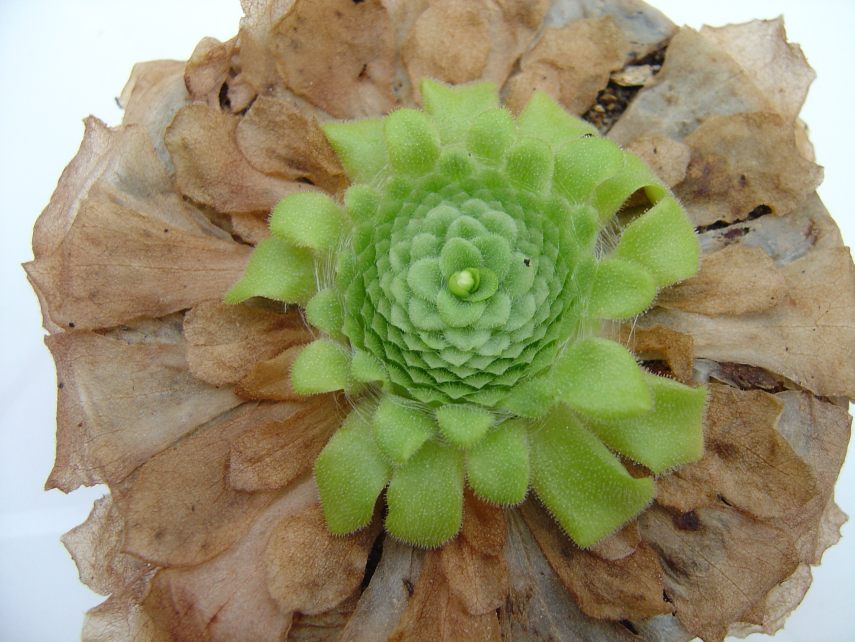
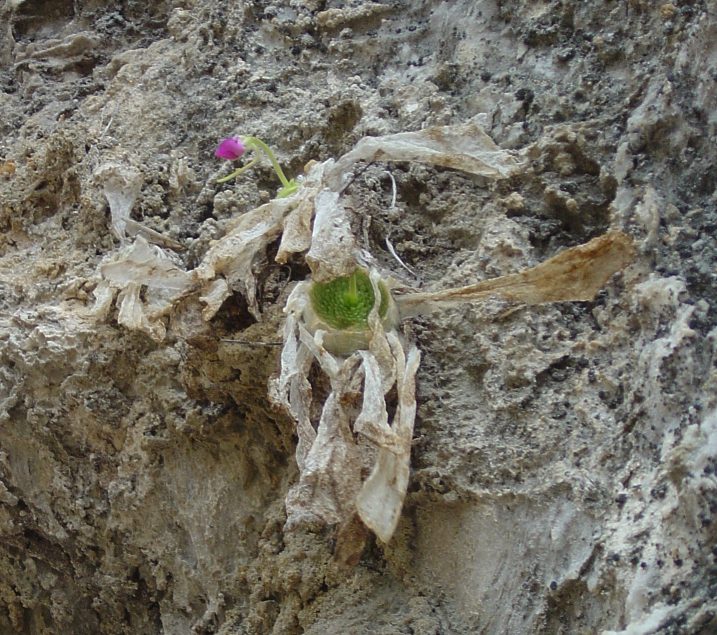
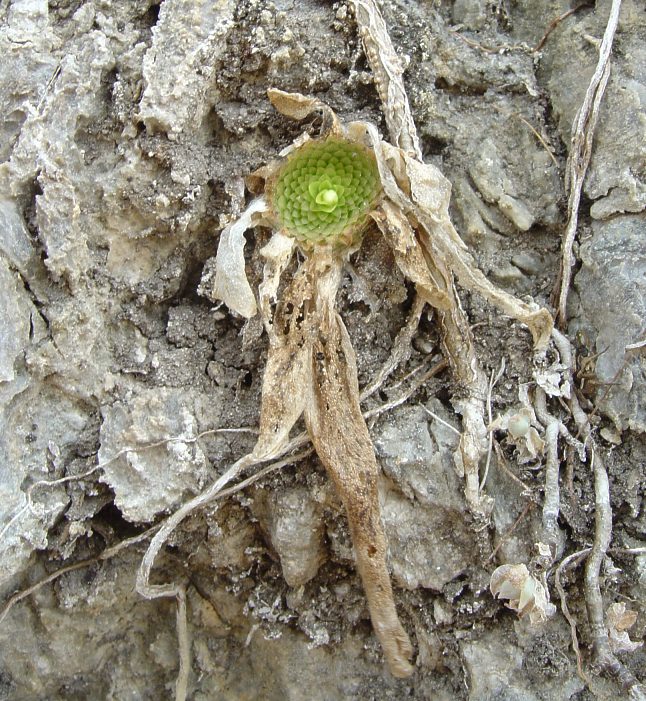
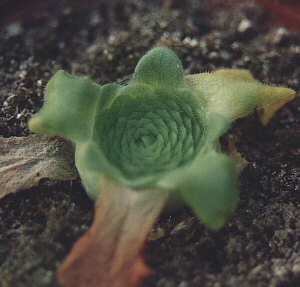
Leaves of the winter rosette are spatulateabout 2 cm long and 2 to 5 mm wide, forming a compact, bulb like rosette. The winter rosette can easily consist of 70 to 130 leaves. In comparison to P. macrophylla the rosette is not "onion like", because the outermost leaves of P. colimensis do not cover all other leaves. The size of the winter rosette can reach a size of 2 to 3.5 cm in diameter. Also typical for the winter rosette of P. colimensis are the long white hair of leaves, cocoon like, keeping the rosette together.
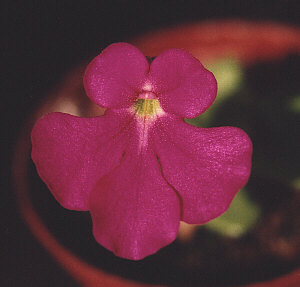
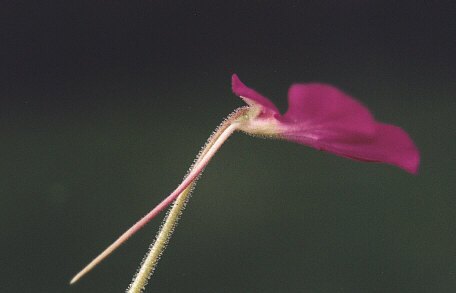
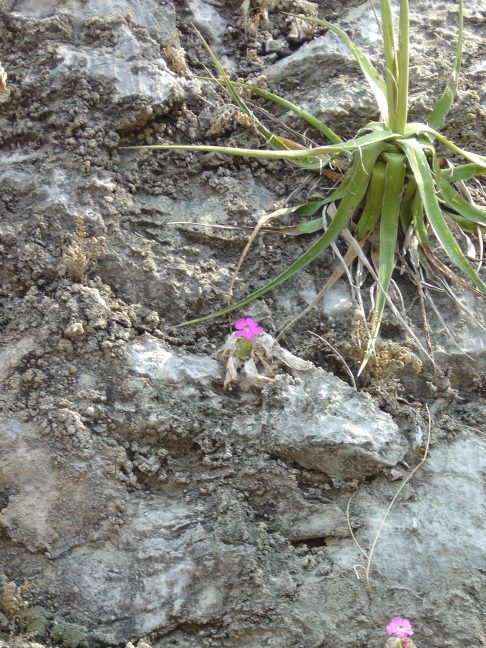
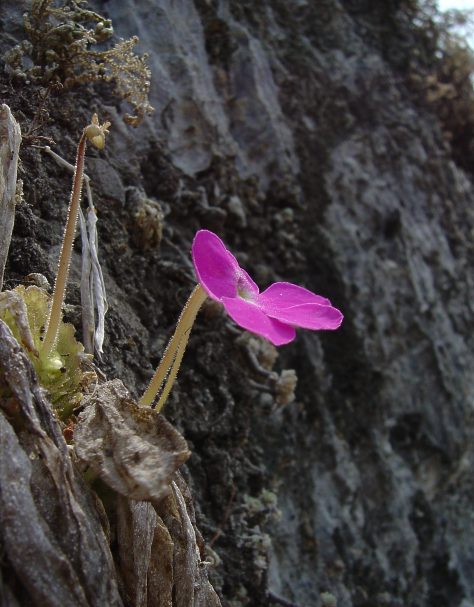
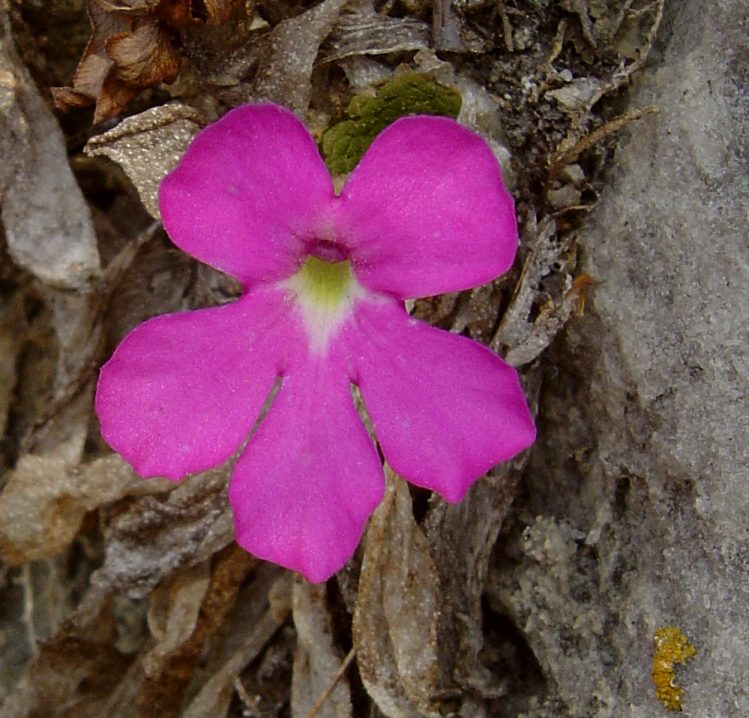
The corolla is divided into two lips and the colour is of an intensive pink, if exposed to direct sunlight the flower shows a metallic aspect. The flower fits into section Orcheosanthus (like P. moranensis), having a very short tube and a very long spur. The upper lip consists of two obovate lobes, which are often half of size compared to the 3 lobes of the lower lip. In total the size of the corolla measures about 3.5 cm in diameter. The spur can reach up to 4 cm. During one season up to 5 flower scapes can appear, occuring together with or before the first summer leaves in May.
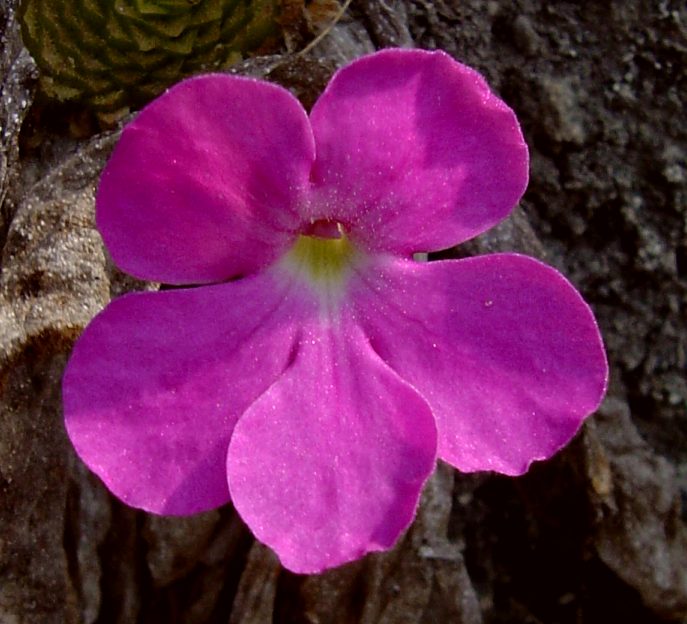
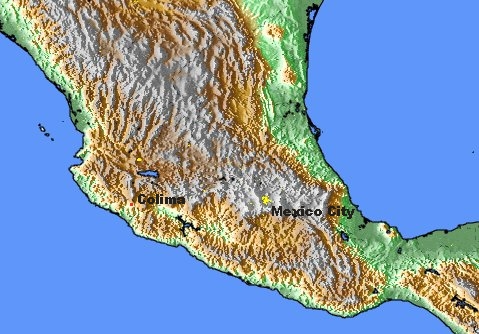
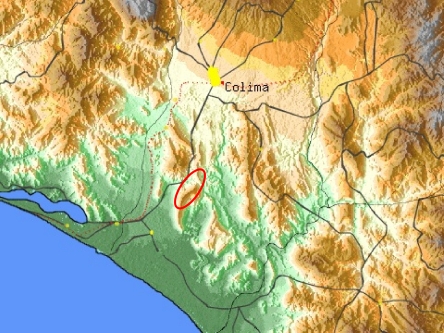
One of the most beautiful species within the genus Pinguicula grows in Mexico and was described in 1963 for the first time by the 2 American botanists McVaugh und Mickel. Even collected many times before, plants of this species were considered as being P. macrophylla or P. moranensis . P. colimensis is found south of the city of Colima and seems to be restricted to that small area.
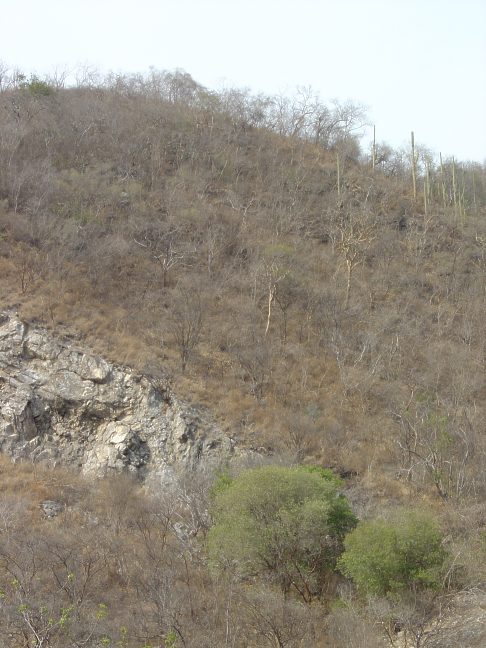
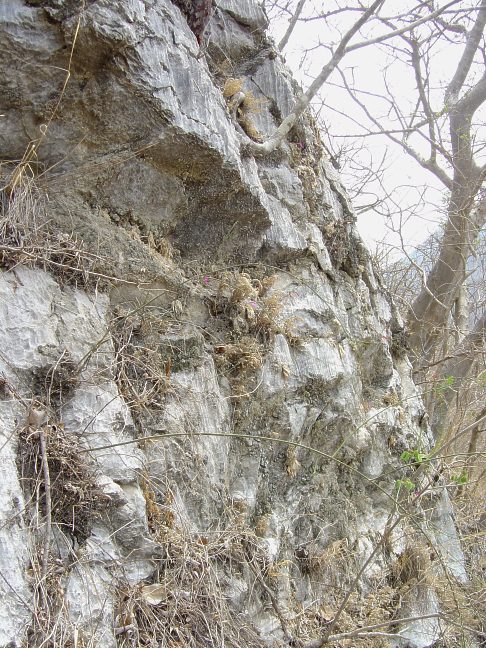
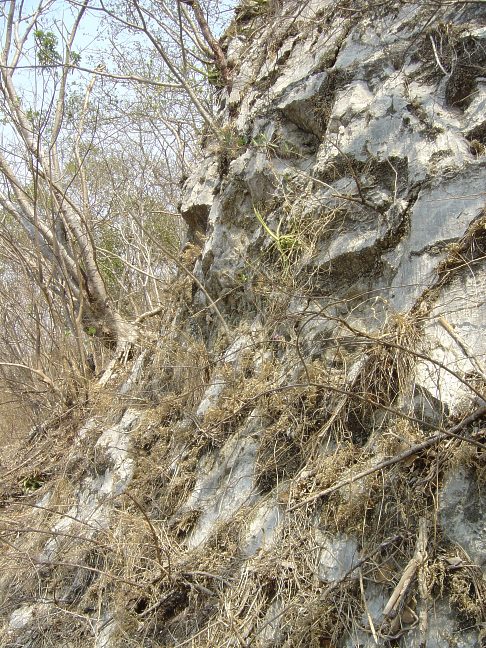
From all known Mexican butterwort species P. colimensis occurs on the lowest altitude (between 350 and 450 m a.s.l.). The plants grow on north facing, semi-shady or shady, vertical gypsum cliffs. The predominant vegetation type there is the " bosque tropical caudifolia", a tropical forest, where the trees and shrubs lose their leaves during the dry season in winter/spring and form new leaves when the rainy season begins. The typical species of that forest are Hechtia laevis, Selaginella lepidophylla, ferns (Cheilanthes sp., Bommeria sp.) and sporadically also cacti.